
How to Teach Toddlers to Express Their Feelings Through Art
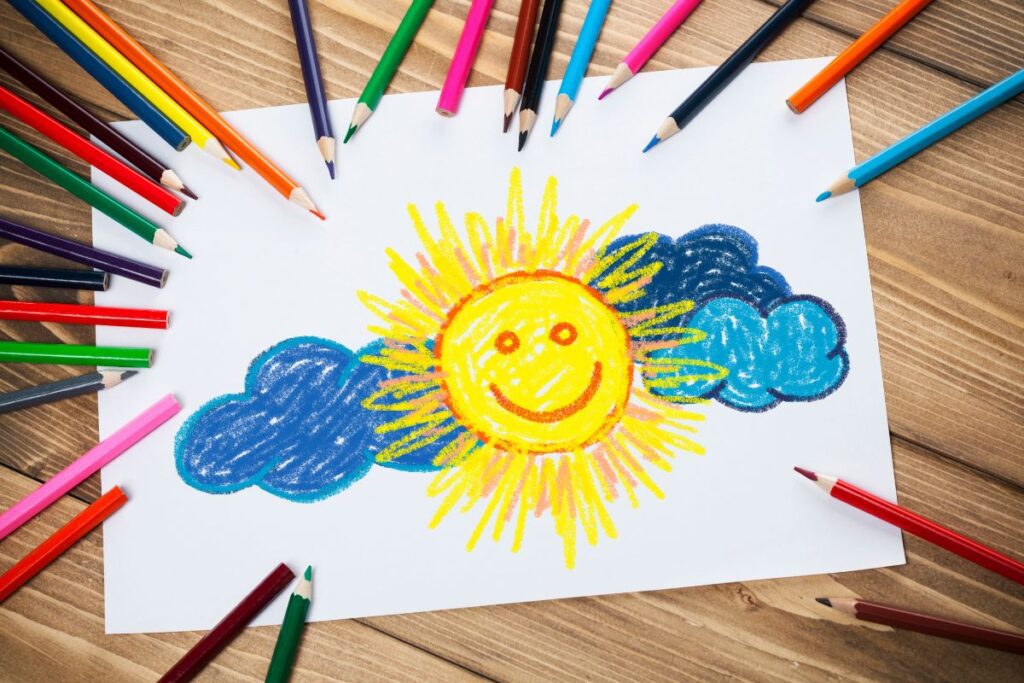
Expressing emotions can be difficult for toddlers, who often lack the words or understanding to communicate how they feel.
One effective way to help toddlers understand and express their emotions is through art. Art provides a safe and non-verbal way for young children to communicate their feelings, whether they’re happy, sad, frustrated, or excited.
In this article, we will explore practical strategies for teaching toddlers to express their emotions through art, fostering emotional development and improving communication skills.
Why Art Is Essential for Emotional Expression in Toddlers
Art is an invaluable tool for helping toddlers navigate their emotions. Young children may struggle to articulate complex feelings, but through drawing, painting, and other forms of creative expression, they can visually represent their emotions.
This not only aids in emotional understanding but also:
Improves Emotional Intelligence: Toddlers begin to recognize and name their emotions, which lays the foundation for emotional intelligence.
Promotes Self-Expression: Art gives toddlers an outlet to express their feelings, even when they can’t find the right words.
Enhances Communication Skills: Art encourages toddlers to communicate through different mediums, whether it’s through colors, shapes, or textures.
Boosts Confidence: Successfully creating something with their own hands helps toddlers feel accomplished and empowered.
 Creating an Art-Friendly Environment for Toddlers
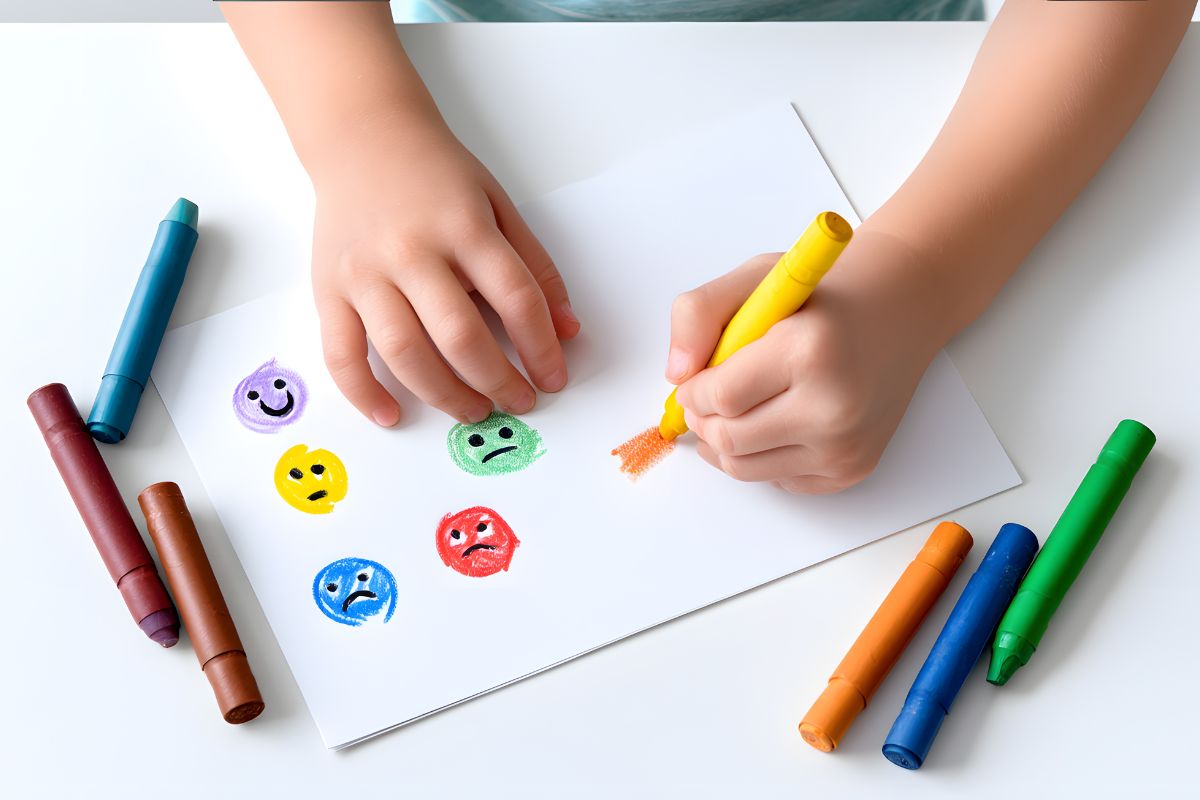 Creating an Art-Friendly Environment for Toddlers
Before introducing art as a way to express emotions, it’s important to set up a space that is conducive to creativity. Here are a few tips on creating an art-friendly environment for toddlers:
1. Designate a Creative Space
Having a specific area for art will allow your toddler to associate this space with creativity and emotional expression.
This could be a small corner of a room, a child-sized table, or even a corner of the kitchen where the mess is easier to clean up.
2. Provide the Right Supplies
Make sure to offer a variety of age-appropriate art materials that will allow your toddler to explore their emotions.
Non-toxic crayons, washable markers, finger paints, and large sheets of paper are great options. Let them choose their materials based on their preferences and needs.
3. Create a Calm and Relaxed Atmosphere
Ensure that the environment is calming. Soft music or a quiet atmosphere helps toddlers focus on their emotions while engaging in the artistic process.
Keep distractions to a minimum so they can immerse themselves in the experience.
Teaching Toddlers to Use Art to Express Feelings
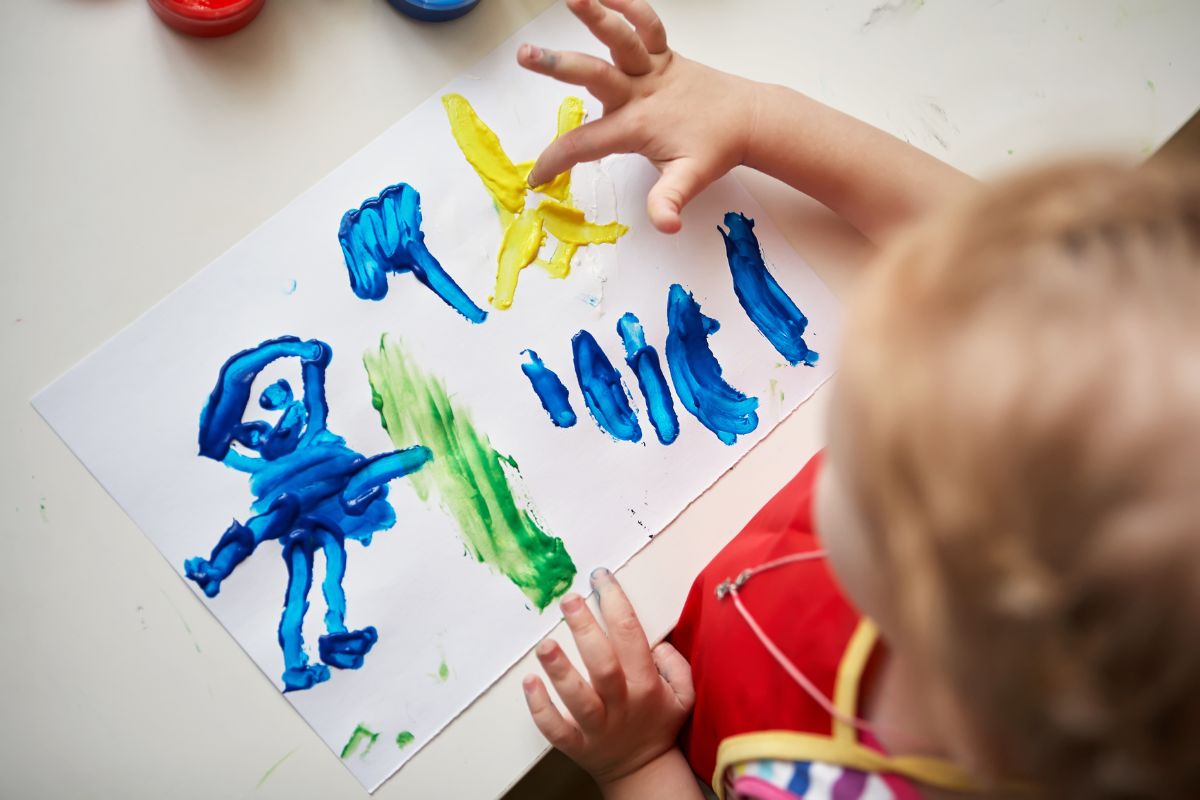 Teaching Toddlers to Use Art to Express Feelings
Now that you’ve set up the space, it’s time to teach your toddler how to use art for emotional expression. Below are some steps to guide them as they get creative.
1. Introduce Basic Emotions Through Colors
Colors are a great starting point for toddlers to associate emotions. Explain to your child how different colors can represent different feelings. For example:
Red can symbolize anger or excitement.
Blue can represent sadness or calmness.
Yellow can express happiness or joy.
You can even incorporate this into simple activities like painting a “happy sun” with yellow or a “sad raincloud” with blue.
This visual connection between color and emotion helps toddlers start associating colors with how they feel.
2. Encourage Free Expression
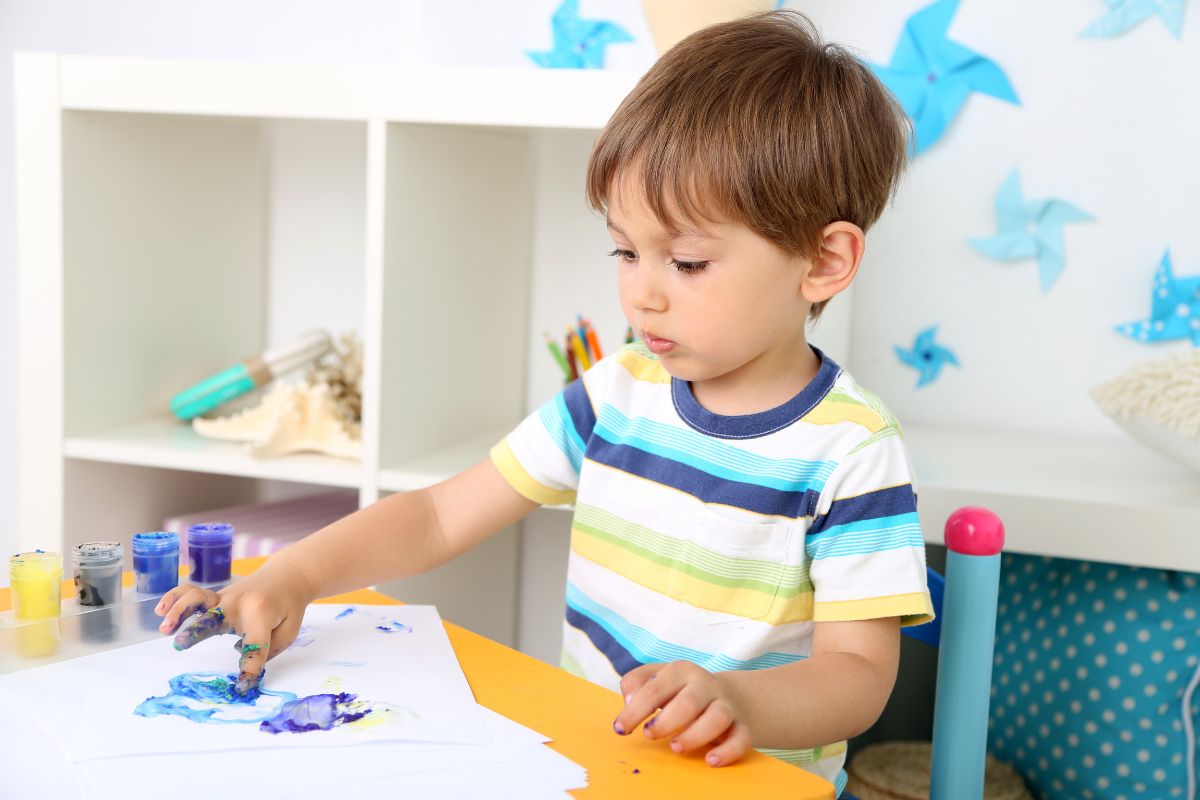 2. Encourage Free Expression
Allow your toddler to create freely without worrying about the outcome. Don’t put pressure on them to “make something pretty” or follow strict rules.
Let them scribble, paint, and experiment with different forms of expression. As they create, ask them gentle questions like, “How does this picture make you feel?” or “What color did you choose because it makes you feel happy?”
This open-ended approach encourages toddlers to explore their emotions in a non-judgmental environment.
3. Use Art to Process Emotions
Sometimes, toddlers experience big emotions that they might not fully understand. Art can be a therapeutic outlet for them to process these feelings.
For example, if a toddler is feeling frustrated, ask them to draw what frustration looks like. This could be represented by chaotic scribbles, sharp lines, or a stormy sky.
Once they finish, validate their feelings by saying, “I see that you’re feeling upset,” and discuss what might have caused the emotion.
This helps toddlers begin to understand the concept that emotions can be worked through, and that art is a healthy way to release and process them.
4. Create Emotion-Themed Art Projects
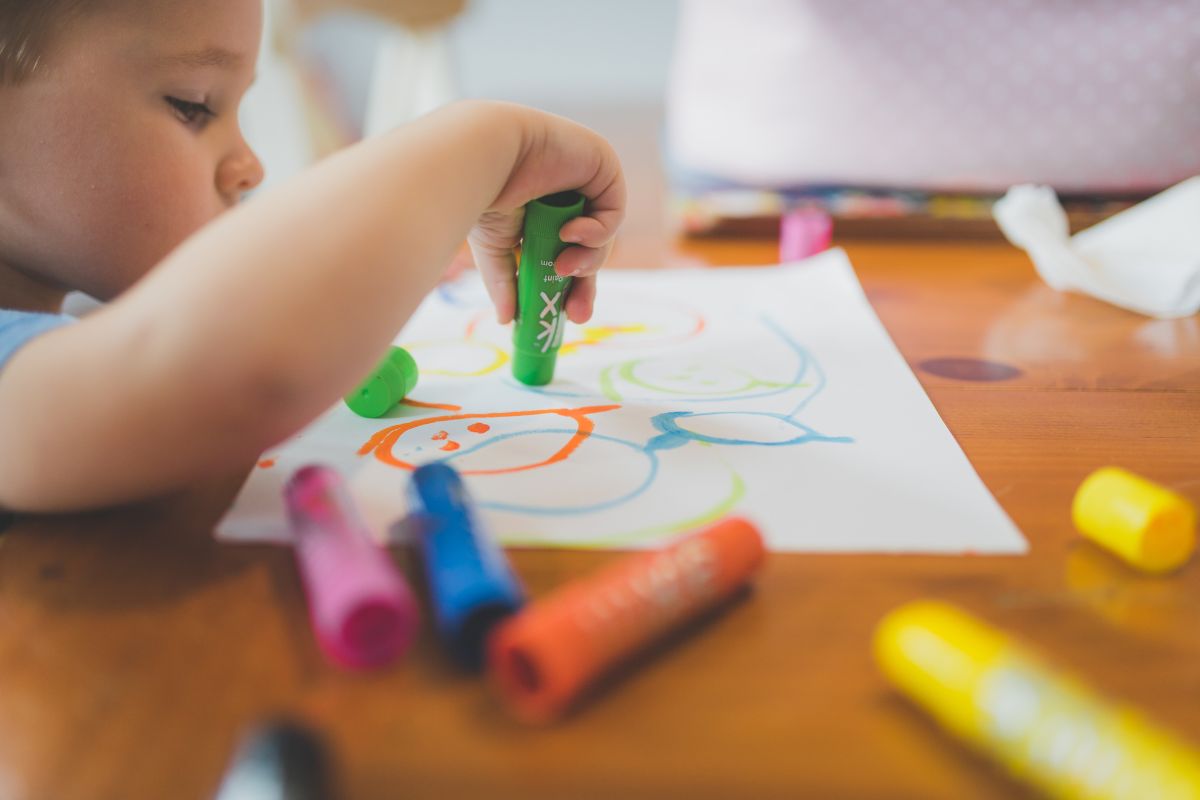 4. Create Emotion-Themed Art Projects
Create specific projects that focus on different emotions. These themed activities give toddlers the opportunity to dive deeper into their emotional world and explore how each feeling can be expressed through art. For instance:
Happy Faces: Have your toddler create a picture of themselves or a character with a big, bright smile.
Sadness Collage: Gather old magazines or colored paper and have your toddler cut out images that represent sadness (like rainy days or dark clouds), then glue them on a piece of paper.
Anger Monster: Create a “monster” or “storm” to represent anger, using sharp lines and intense colors like red or orange.
By creating these themed projects, toddlers can begin to recognize that it’s okay to feel different emotions, and that those emotions can be expressed in various ways.
5. Use Art to Discuss and Reflect
Once the art project is complete, sit with your toddler and reflect on what they’ve created. Ask them to tell you about the colors they used, why they chose certain shapes, or what the picture represents.
This is a great opportunity to label emotions together and discuss the importance of expressing them in a healthy way.
For example, you could say, “I see you used lots of red.
Does this picture make you feel mad or excited?” This prompts the toddler to recognize the connection between their art and their feelings, strengthening their emotional awareness.
Incorporating Art into Daily Routines
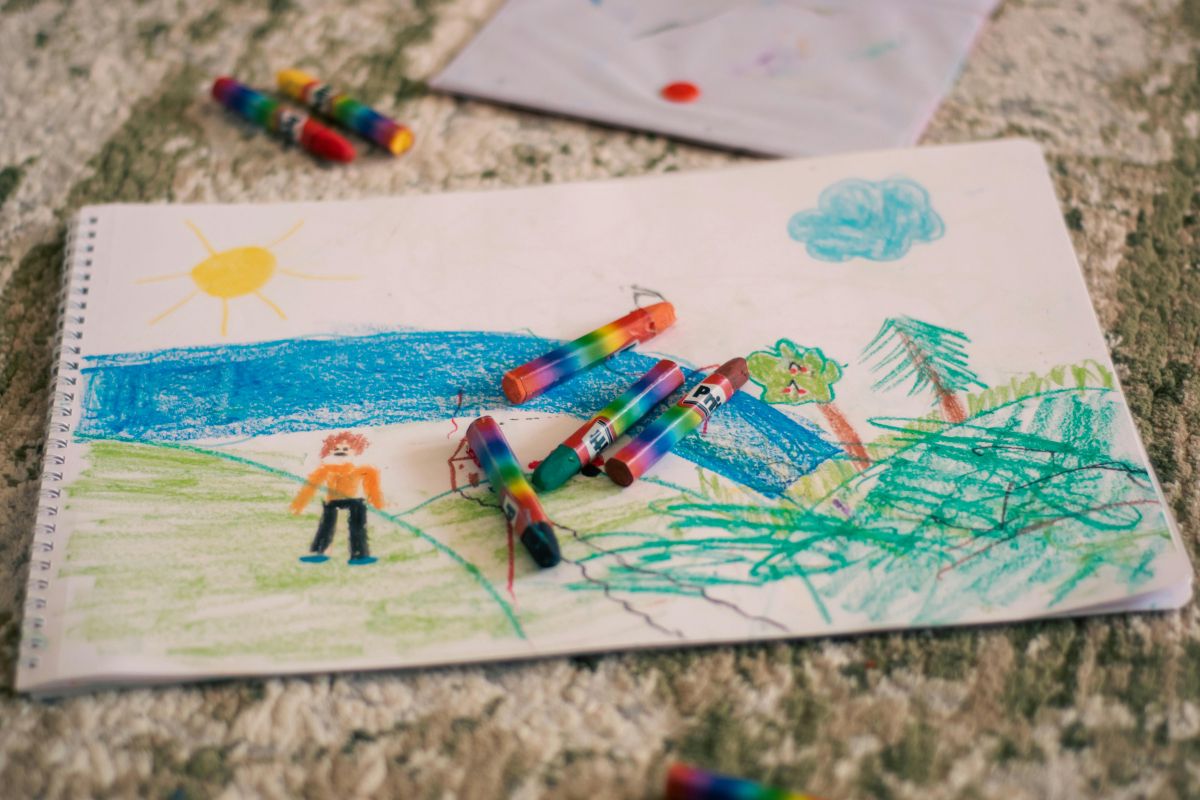 Incorporating Art into Daily Routines
To make art a part of everyday life, incorporate simple art activities into your toddler’s daily routine. You can:
Have a drawing session before or after nap time to unwind.
Encourage them to draw their day as a way to reflect on their experiences.
Keep a feelings journal where your toddler can draw how they felt that day (this can be as simple as a smiley face or a sad face).
Making art a daily habit helps toddlers continue to express themselves emotionally while developing their creative skills.
Helping Toddlers Navigate Their Emotions Through Art
Teaching toddlers to express their feelings through art is a rewarding process that can make a real difference. It helps them understand and manage their emotions, and it also builds creativity, communication, and self-expression.
By creating a supportive environment, using age-appropriate materials, and guiding them through various art projects, you can help toddlers develop the skills they need to recognize and communicate their emotions.
Remember, expressing emotions through art is a fun, ongoing process that will have lasting benefits for your toddler’s emotional development.
Did you find this post useful or inspiring? Save THIS PIN to your PARENTING Board on Pinterest! 😊


You may also like