
- Urbaki Parenting
- Toddlers
- Tips for Creating a Calm Down Corner for Toddlers at Home
Tips for Creating a Calm Down Corner for Toddlers at Home

As toddlers navigate the emotional rollercoaster of early childhood, a calm down corner at home can be an invaluable tool to help them regulate their emotions. This dedicated space allows children to take a break, breathe, and self-soothe when feeling overwhelmed.
A calm down corner provides both parents and children with a way to manage emotions, teaching important skills such as self-regulation and emotional awareness.
In this article, we’ll explore how to create a calming environment for your toddler and make the most of this space.
Why a Calm Down Corner is Essential
Emotions can be intense for toddlers, especially when they are learning how to cope with frustration, anger, or sadness. A calm down corner can serve as a safe space where they can retreat when emotions run high. By offering a quiet area to pause, toddlers can learn to process their feelings before returning to their activities. This practice not only promotes emotional intelligence but also supports the development of emotional self-control, an essential skill for managing life's ups and downs.
Key Benefits of a Calm Down Corner
Self-regulation: Toddlers learn how to manage their emotions, helping them handle stressful situations more effectively.
Independence: The corner encourages toddlers to take charge of their emotions in a way that’s manageable for them.
Positive behavior reinforcement: The calm down corner becomes a space for positive coping, rather than resorting to tantrums or tears.
Bonding opportunities: Parents can use the space to offer gentle guidance, reinforcing a supportive and loving relationship.
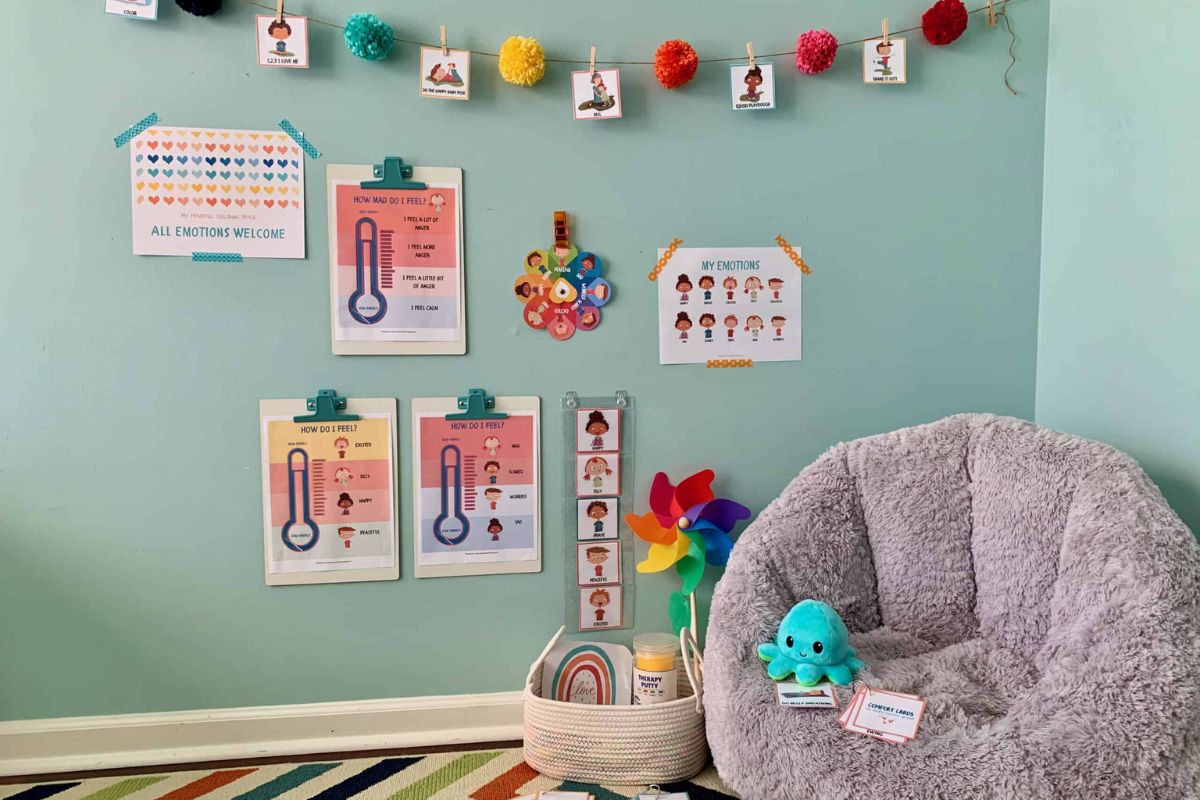
How to Set Up a Calm Down Corner
Choose the Right Location
The first step in creating a calm down corner is finding the perfect location. Ideally, this area should be quiet, away from distractions, and separate from high-energy spaces in the home.
You might place it in a corner of the living room, a cozy nook in the child's bedroom, or even a small section of a hallway. The key is to make sure it's easily accessible and doesn’t feel isolating.
Make It Comfortable
Comfort is crucial for a calm down corner. The goal is to create a space where your toddler feels relaxed and comfortable enough to settle down. Here are some items to include:
Cushions or pillows: Soft cushions or pillows provide a cozy place for your toddler to sit, lie down, or rest. This can help them feel secure.
Blanket: A soft, familiar blanket can offer additional comfort and create a sensory-safe environment.
Floor mats: Consider adding a soft mat or rug to the space for a comfy seating area.
Calming lights: A gentle nightlight or fairy lights can provide soft illumination that creates a calming atmosphere.
 Add Sensory Elements
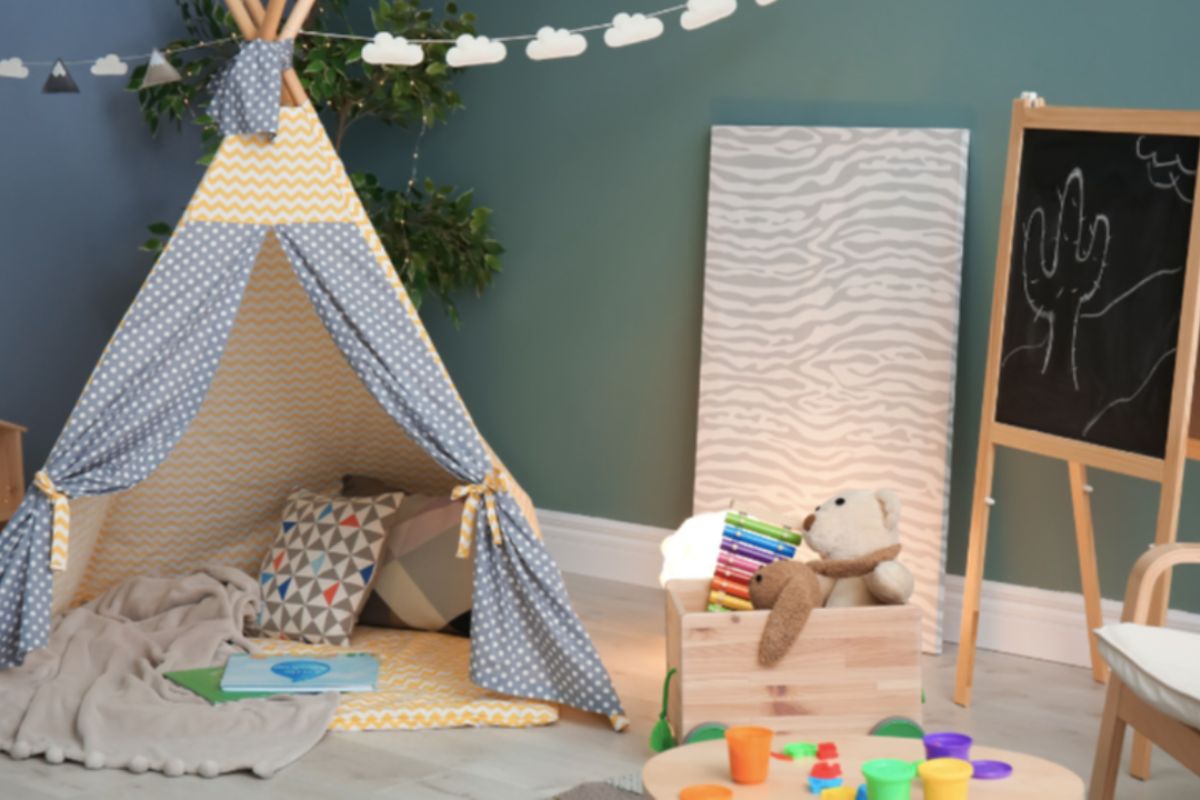 Add Sensory Elements
Toddlers respond well to sensory stimuli, so including sensory-friendly items in the calm down corner is a great idea. These items can help soothe them and give them something to focus on during moments of distress. Consider adding:
Fidget toys: Toys like stress balls, fidget spinners, or squishy toys can help toddlers channel excess energy and calm their nerves.
Soft music or nature sounds: A calming playlist with soft music or nature sounds (like rain or ocean waves) can enhance the soothing environment.
Textured fabrics: Different textures, such as soft blankets, squishy pillows, or textured mats, can engage your child’s sense of touch and add to the overall calm.
How to Use the Calm Down Corner Effectively
Establish Clear Rules
To make the calm down corner work, it's important to set clear expectations.
Let your toddler know that the space is there to help them when they feel upset, angry, or frustrated. It’s important to explain that using the corner is a positive choice and not a form of punishment. Reinforce that the corner is a place to take a break, not a timeout.
You might say something like, “When you feel upset, you can go to your calm down corner to rest and feel better. When you’re ready, you can come back and play again.”
Teach Self-Soothing Techniques
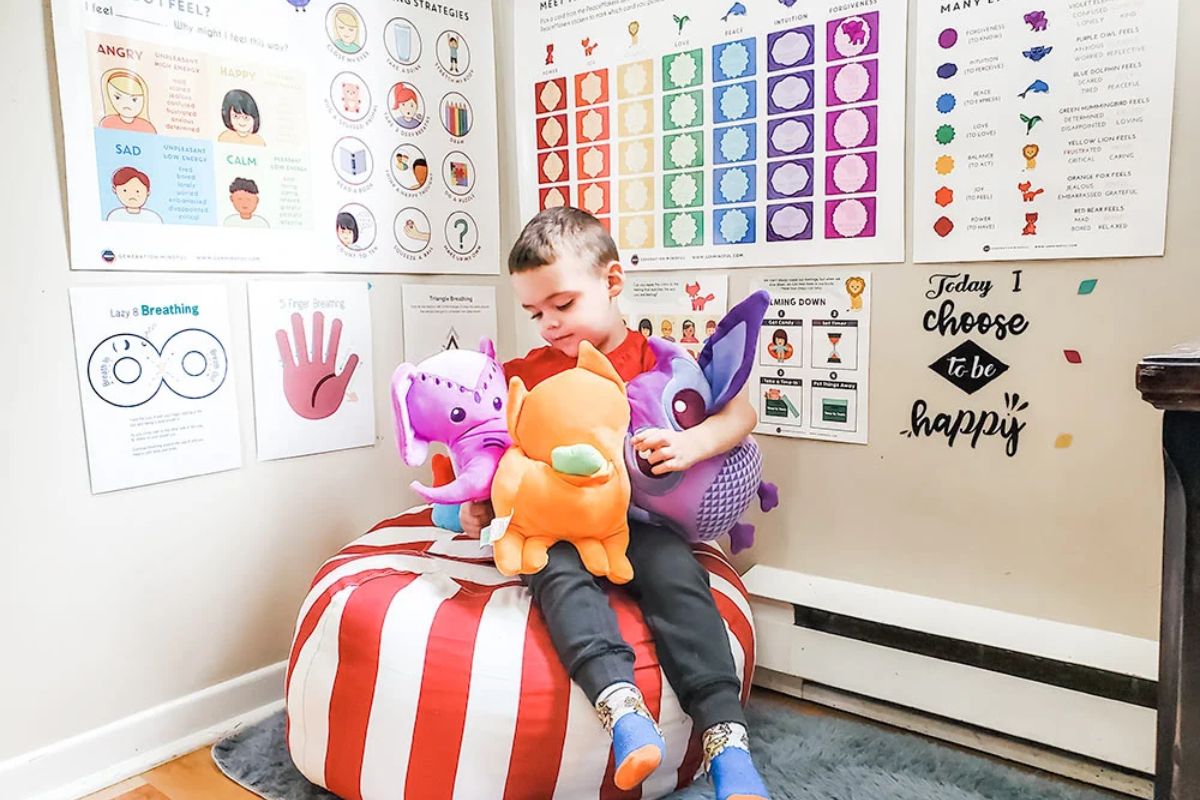 Teach Self-Soothing Techniques
Once the calm down corner is set up, it's time to teach your toddler how to use it. This includes showing them how to self-soothe and offering strategies to calm their bodies and minds. You can incorporate the following techniques:
Deep breathing: Teach your toddler to take slow, deep breaths. You can make it fun by pretending to “smell a flower” as they inhale and “blow out the candle” as they exhale.
Counting: Encourage your toddler to count to ten to help them focus and calm down.
Tactile activities: Provide items like textured toys or soft fabric that they can touch or squeeze to help them regulate their emotions.
Reinforce Positive Behavior
When your toddler uses the calm down corner appropriately, be sure to praise them for making a positive choice. Positive reinforcement helps them understand that the corner is an effective tool for managing their emotions.
For example, you might say, “Great job taking deep breaths in the calm down corner. That really helped you feel better!”
Also, keep in mind that patience is key. It may take some time for your toddler to learn how to use the corner independently, so gentle encouragement and consistency are essential.
Activities to Enhance the Calm Down Corner
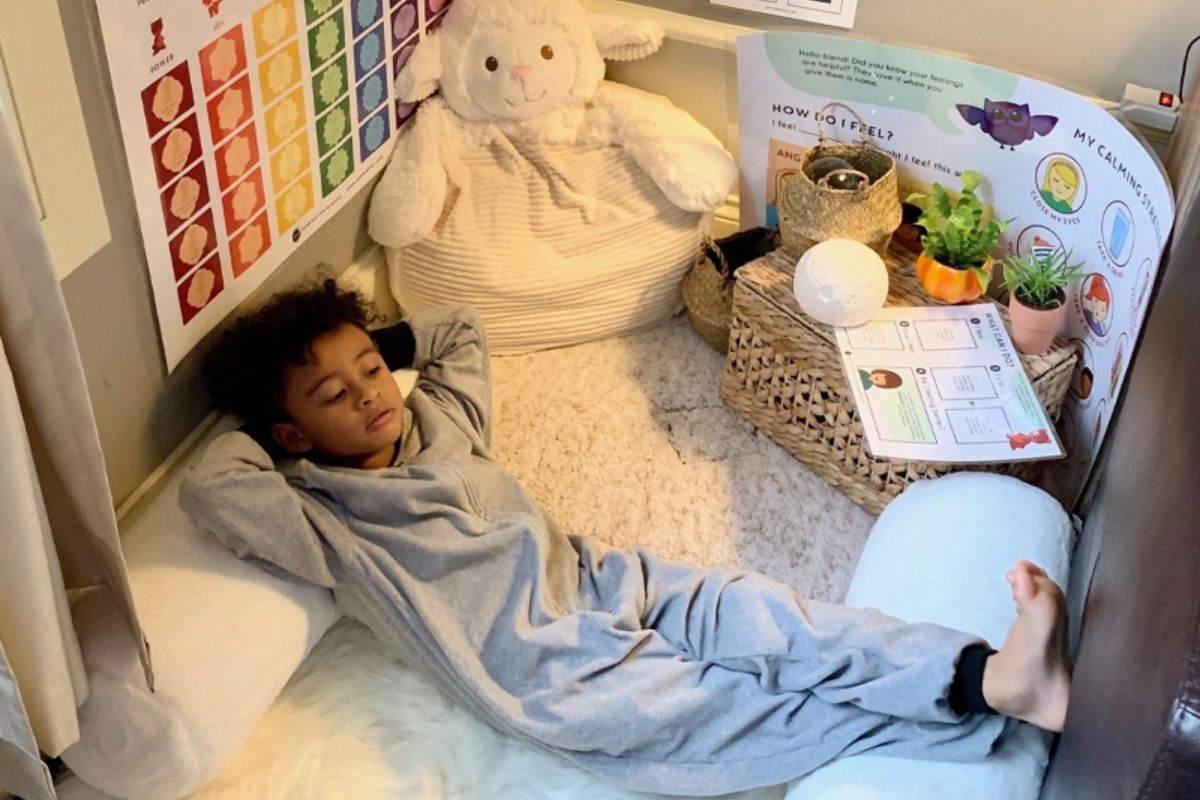 Activities to Enhance the Calm Down Corner
To make the calm down corner even more effective, you can include calming activities that help toddlers focus on regulating their emotions. Here are some suggestions:
Calm Down Jars
A calm down jar is a simple sensory tool you can create with a jar, glitter, and water. When your toddler is feeling upset, they can shake the jar and watch the glitter slowly settle to the bottom. This can help them take their mind off the situation and focus on something calming.
Emotion Chart
An emotion chart with pictures of various feelings can help your toddler identify and express how they are feeling. You can hang it near the calm down corner so they can point to the emotion they are experiencing. This encourages them to verbalize their feelings, which is an important skill for emotional development.
Picture Books
Include a small collection of picture books in the calm down corner. Books with calming stories or those that teach about emotions can help toddlers process their feelings in a gentle and soothing way.
How to Keep the Calm Down Corner Engaging
While it’s essential to make the space relaxing, it’s also important to keep it engaging so your toddler enjoys using it.
You can change up the items in the corner periodically to keep it fresh and exciting. For example, swap out the toys, books, or textures every few weeks to maintain interest.
Creating a Safe Space for Emotional Growth
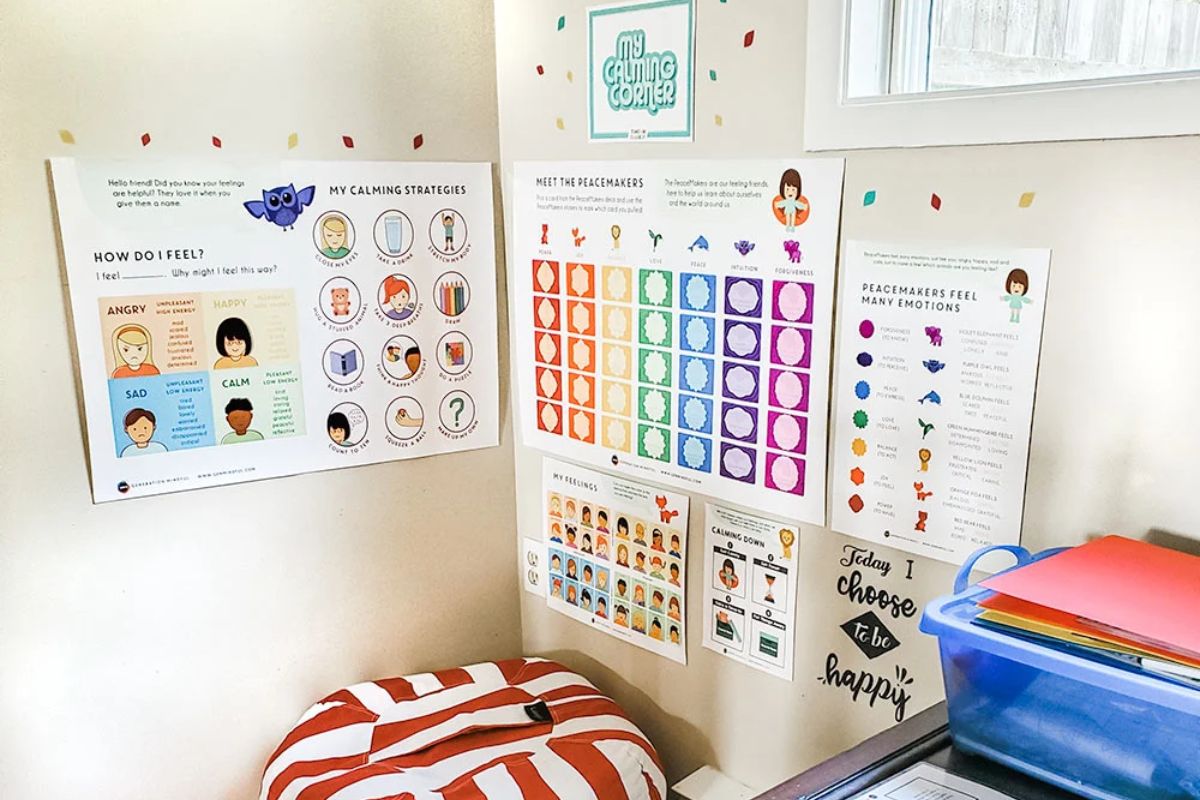 Creating a Safe Space for Emotional Growth
A calm down corner is not just about giving your toddler a timeout but rather offering them a space for emotional growth and self-regulation.
By creating a soothing environment and teaching your toddler how to use it effectively, you provide them with a valuable tool for managing their emotions. Over time, this practice will help your toddler develop the emotional intelligence and coping skills they need for a lifetime.
Did you find this post useful or inspiring? Save THIS PIN to your PARENTING Board on Pinterest! 😊

You may also like