
10 Christmas Sensory Bins for Toddlers: Easy Ideas With Things You Already Have
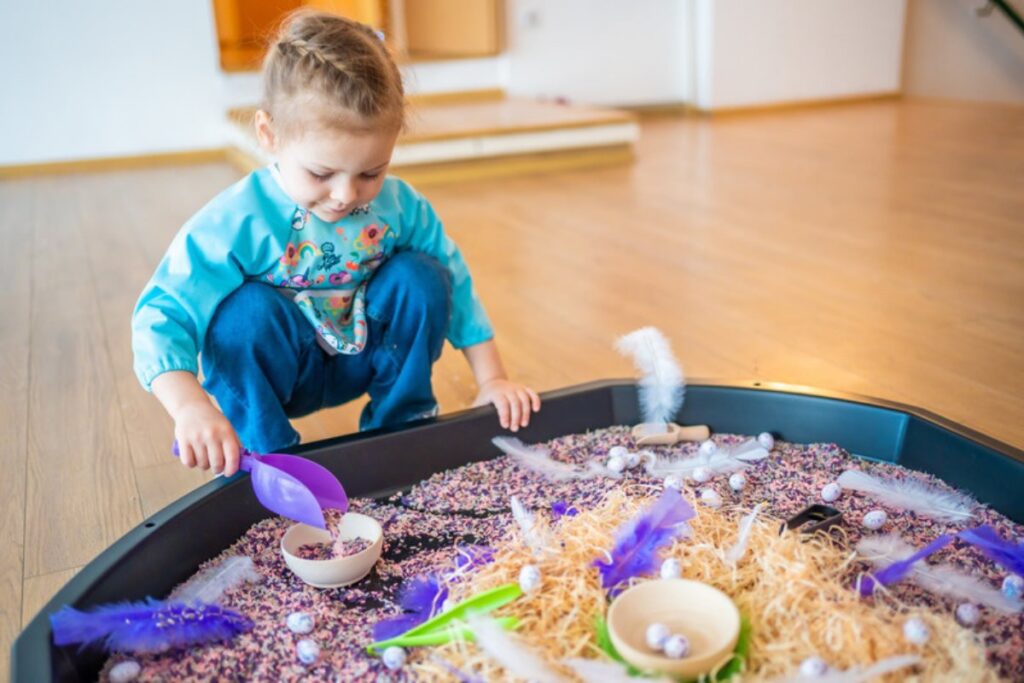
Cold, dark afternoons are long with a toddler at home. A sensory bin is one of the easiest ways to fill an hour: a box, something to scoop, a few things to find. Add a little Christmas and you have an activity your child will ask for again and again.
Below you will find 10 Christmas sensory bin ideas for toddlers, all made with things most homes already have in December. Each one takes about 10 minutes to set up. We also cover what to put in the bin, how to keep it safe, and how to stop the rice from ending up in every corner of the house.
What Is a Sensory Bin (and Why Toddlers Love It)
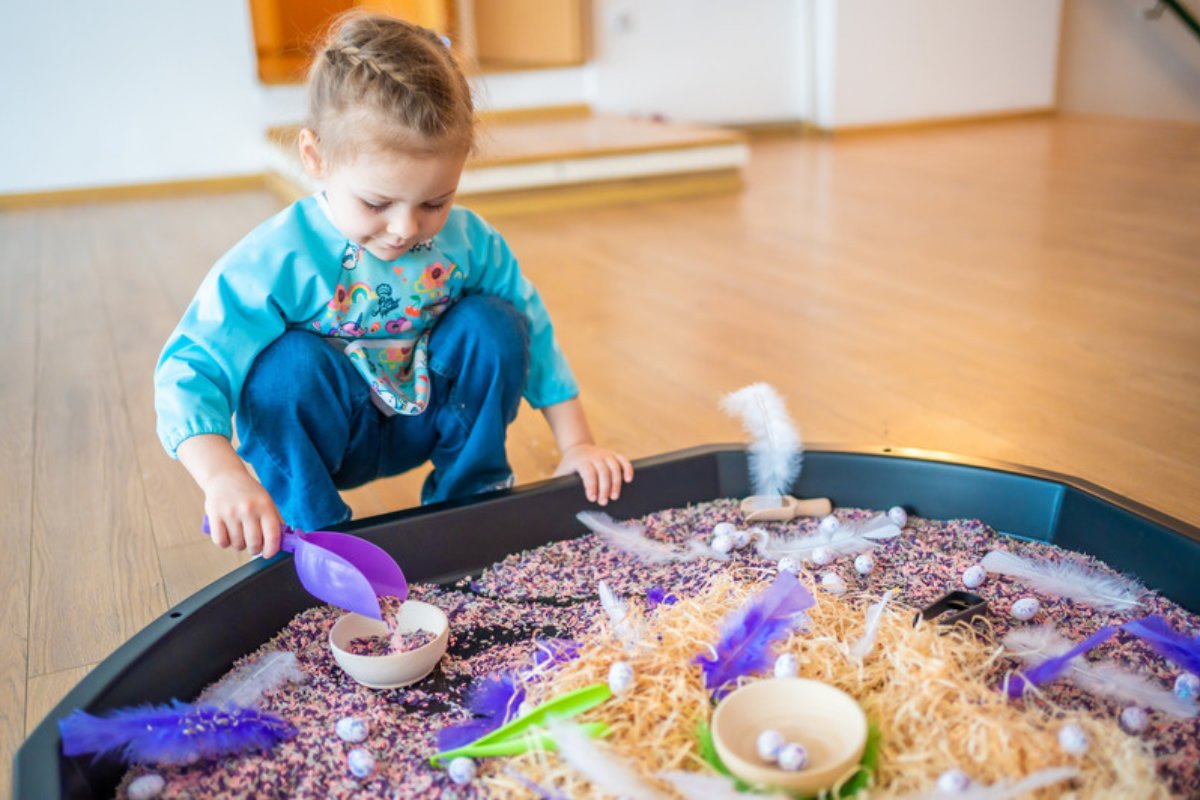
A sensory bin is a shallow container filled with a base material, like rice, water or paper, plus a few tools and objects to explore. Your child digs, pours, scoops, sorts and hides things. That is the whole activity.
It looks simple, but it keeps little hands busy in a useful way:
- Fine motor skills: pinching, scooping and pouring build the small hand muscles toddlers later use to hold a crayon or a spoon.
- Language: talking about what they feel (soft, cold, bumpy, crunchy) adds new words in a natural way.
- Focus: many toddlers who move from toy to toy every two minutes will stay with a good bin for 20 minutes or more.
- Independent play: once the bin is set up, you can sit nearby with a coffee while your child leads the game.
If you want to read more about why open-ended play matters at this age, see our guide to play-based learning in toddler development.
What You Need to Set Up a Sensory Bin
You do not need to buy a special table. A plastic storage box, a baking tray with high sides or a washing-up bowl all work well. A shallow container is easier for small arms than a deep one.
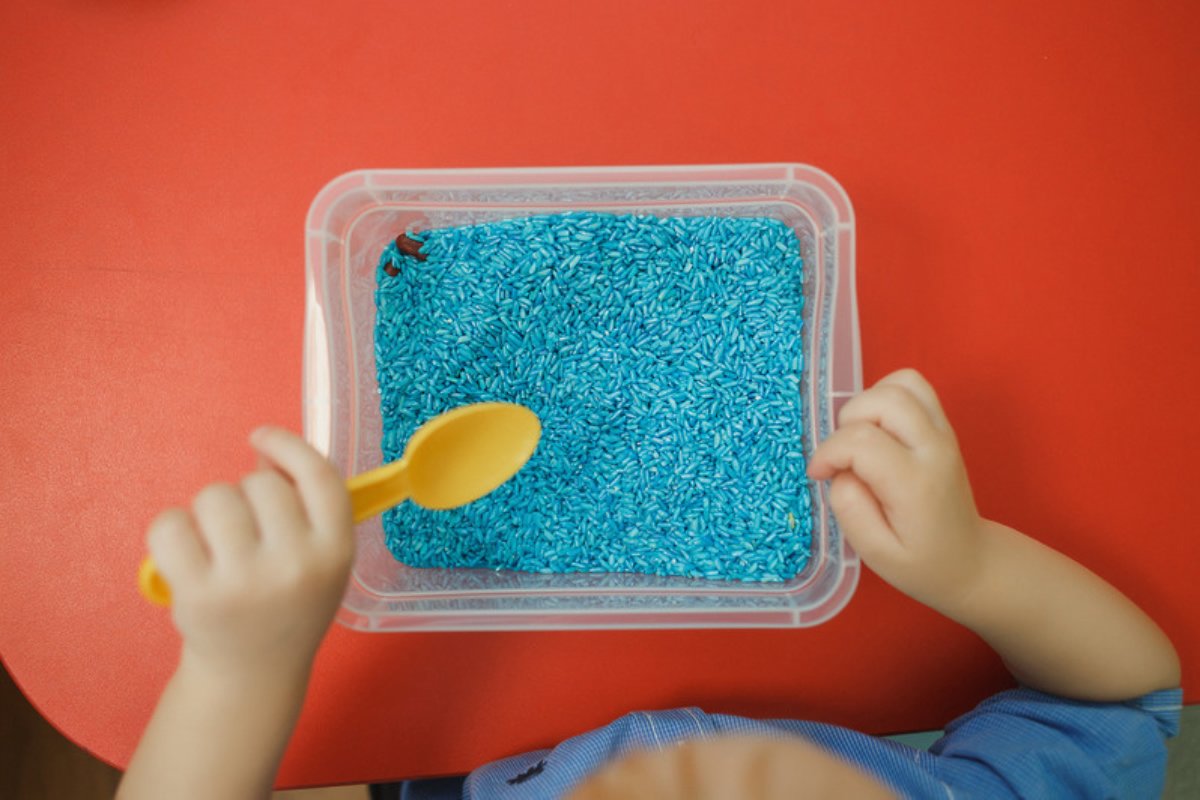
Here is a quick guide to the basics:
| What | Easy options | Good to know |
|---|---|---|
| Container | Under-bed storage box, baking tray, washing-up bowl | Low sides make scooping easier |
| Base filler | Water, crinkled paper, cooked pasta, dry rice or oats | Choose by age (see safety notes below) |
| Tools | Measuring cups, ladles, kitchen tongs, small cups, a funnel | Two or three tools are enough |
| Things to find | Shatterproof ornaments, large pine cones, toy figures, cookie cutters | Everything should be bigger than your child's mouth |
| Floor cover | Old towel, shower curtain, cheap tablecloth | Makes cleanup much faster |
Safety First: Keep It Simple and Stay Close
Toddlers explore with their mouths, so the rules for a bin depend on your child, not only on their age.
- Always stay with your child while they play. A sensory bin is not an activity to leave them alone with.
- Size matters. Small objects like marbles, coins, small balls and pieces of balloon are common choking hazards for young children. The American Academy of Pediatrics lists the main ones in its choking prevention guide.
- Dry rice, beans and small pasta are best for children who no longer put things in their mouths. For younger toddlers, choose water, paper or large items.
- Use shatterproof decorations only. Glass ornaments, tinsel, small bells and anything with hooks stay on the tree.
- Keep ribbons short and put everything away when play is over.
- Water play needs an adult within arm's reach, even with a few centimeters of water.
If you have questions about what is safe for your child, your pediatrician is the best person to ask.
10 Christmas Sensory Bin Ideas for Toddlers
Start with one bin, see what your child enjoys, and rotate. Most of these work from around 18 months with close supervision; the ones with dry fillers are marked for older toddlers.
1. Floating Ornament Rescue
Fill a tray with a few centimeters of warm water and drop in large shatterproof ornaments. Give your child a ladle or a small strainer and a bowl to "rescue" them into. Count the ornaments together as they come out. A towel under the tray is a must.
2. Frozen Toy Ice Block
The night before, freeze a few small plastic animals or figures in a food container full of water. In the morning, put the ice block in a tray with a cup of warm water and a squeeze bottle or spoon. Melting the ice to free the toys can keep a toddler busy for a long time, and it is a fun way to talk about cold and warm.
3. Wrapping Paper Crinkle Bin
Save the tissue paper, brown paper and empty boxes from your first gifts. Crumple the paper into a big bin and hide a few favorite toys inside. This one is great for younger toddlers because there is nothing small to worry about. Remove tape, staples and long ribbons first.
4. Unwrap-the-Box Bin
Wrap small empty boxes loosely in paper (no tape, or very little) and put a toy or a board book inside each one. Toddlers love the sound of tearing paper, and this is good practice for Christmas morning.
5. Pine Cone and Evergreen Nature Bin
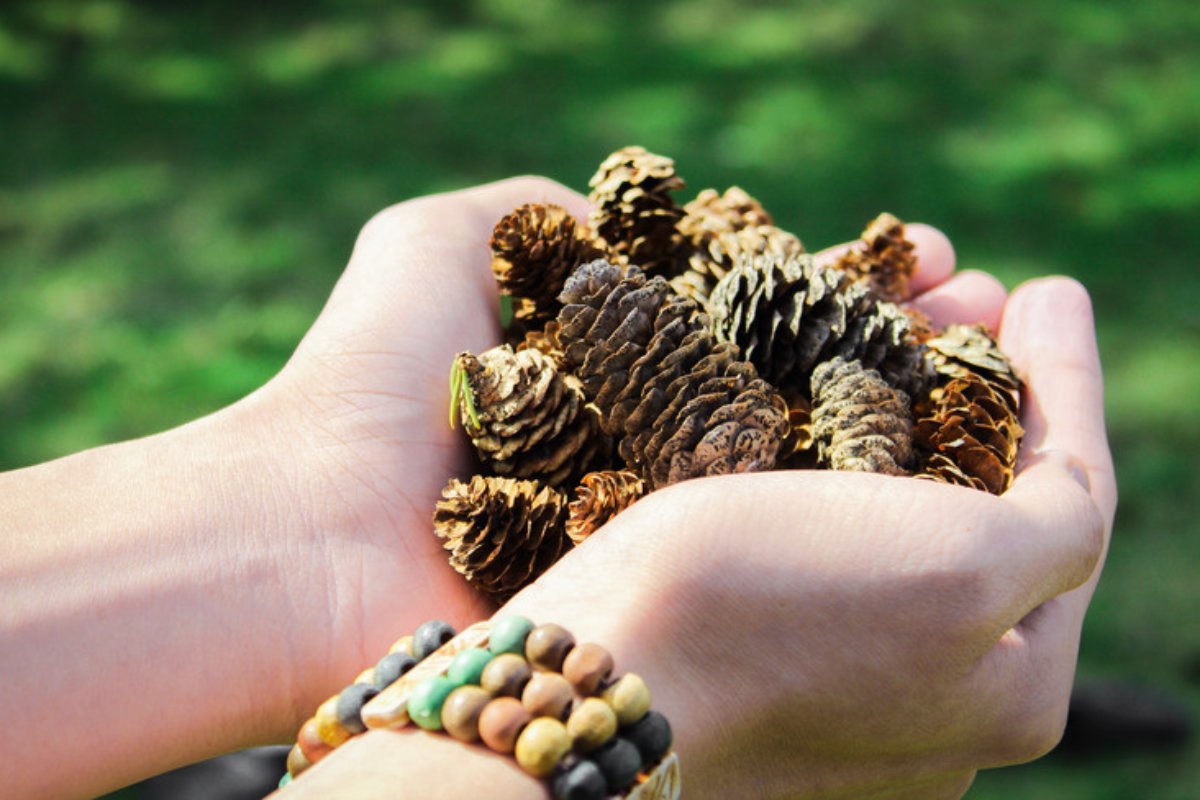
Collect large pine cones and a few short branches of fir or spruce on a winter walk. Add some wooden spoons and a basket. Let your child smell the branches, feel the rough cones and fill and empty the basket. Pick cones that are larger than your child's fist and check for loose pieces.
6. Cornstarch "Snow" Bin
Mix cornstarch with a little water until it feels like thick paste. It is solid when you squeeze it and runny when you let go, which fascinates toddlers. Add a few plastic animals for a snowy scene. It wipes off hands and washes out of clothes easily.
7. Mitten and Sock Match-Up
Put pairs of mittens, gloves and warm socks into a laundry basket. Show your child how to find two that look the same and lay them side by side. It is calm, quiet and teaches colors and matching. Bonus: the laundry gets sorted.
8. Cookie Cutter Dough Bin
Put play dough in a tray with Christmas cookie cutters, a small rolling pin and a few plastic plates. Toddlers press, cut, stack and "bake" pretend cookies. Stay close if your child still tastes everything, and keep the dough away from the dog.
9. Red and Green Color Sort (Older Toddlers)
Fill a bin with large red and green items: blocks, cups, lids, plastic balls bigger than a tennis ball. Add two bowls and help your child sort by color. For children who have moved past mouthing, you can add dyed rice or dry pasta as a base.
10. Christmas Treasure Dig (Older Toddlers)
For children around 3 who no longer put things in their mouths, fill a bin with dry oats or rice, a set of measuring cups and a funnel. Add a few large plastic Christmas figures to bury and find. Keep small jingle bells out of the bin for younger siblings.
How to Keep the Mess Under Control
The mess is the main reason parents skip sensory play. A few habits make it much easier:
- Use a floor cover every time. An old shower curtain under the bin catches almost everything.
- Fill the bin only one-third full. Less filler means less spilling.
- Set one rule: "The rice stays in the bin." Gently repeat it and end the game if it keeps flying.
- Play before bath time so sticky hands go straight into the water.
- Make cleanup part of the game. Let your child put the tools back in a box and help shake the towel.
- Store bins with a lid and reuse dry fillers for weeks.
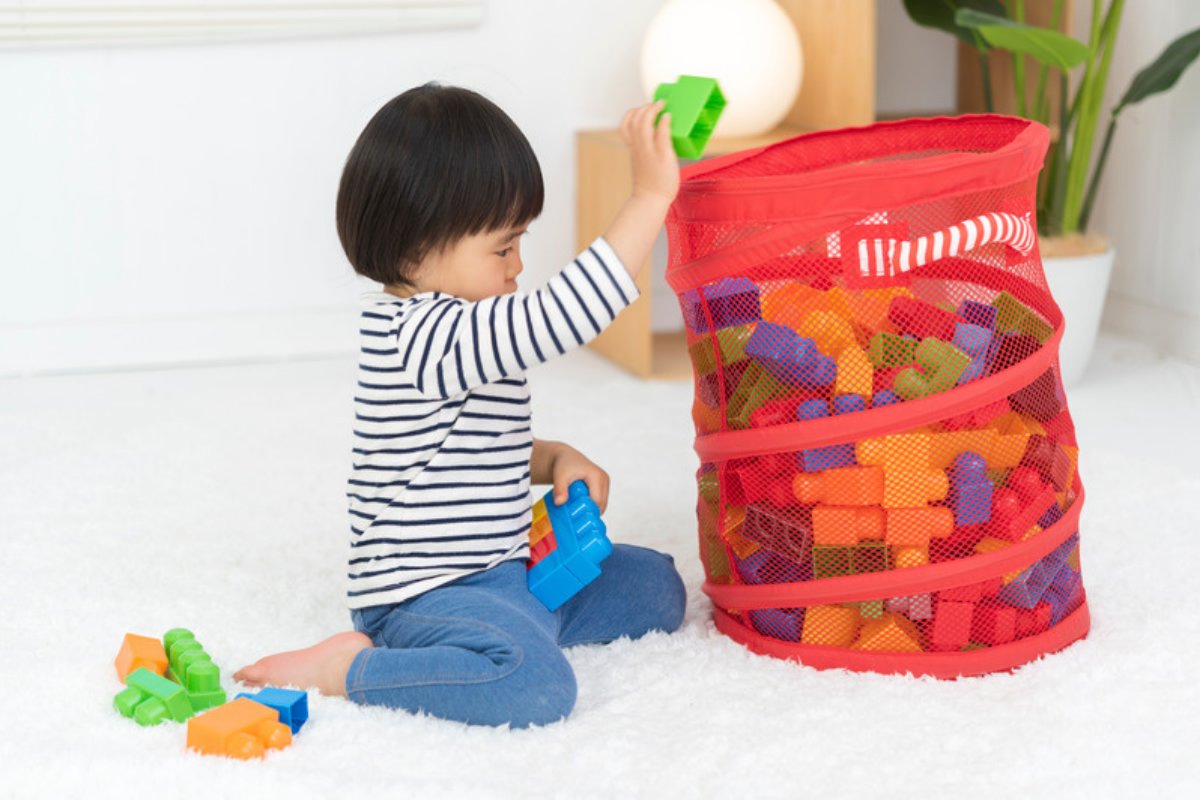
Rotating bins also helps. Keep two or three ready and bring out one at a time, like you would with toys. Our post on toy rotation explains how to make this easy.
Frequently Asked Questions
At what age can toddlers play with sensory bins?
Many children enjoy simple bins from around 18 months, with water, paper or large objects and an adult right next to them. Dry rice, beans and small pasta are better for children who no longer put things in their mouths, often around 3. Every child is different, so go by what you see.
How long will my toddler play with a sensory bin?
Anywhere from 5 to 30 minutes. New bins usually hold attention longer, so rotating ideas helps. If your child loses interest, change one thing: add a new tool or hide something new.
Can I reuse sensory bin fillers?
Dry fillers like rice and oats can be stored in a sealed box and used again for weeks as long as they stay dry and clean. Wet fillers like cornstarch "snow" and water should be thrown away after play.
You Might Also Like
- 15 Easy Christmas Crafts for Toddlers: Simple Ideas for Little Hands
- 20 Cozy Winter Activities for Toddlers at Home (Indoor and Outdoor)
- The Importance of Play-Based Learning in Toddler Development
A sensory bin does not need to be perfect or pretty. A box, something to scoop and a little bit of Christmas is enough to turn a long winter afternoon into a happy one.


You may also like