
How to Prepare Your Baby for the First Bath Experience

Bringing your newborn to the bath for the very first time can feel exciting—and a little intimidating.
The good news? With a bit of planning and a calm, gentle approach, that first bath can become a soothing, confidence-boosting moment for everyone.
This guide walks you through what to do before, during, and after the bath so you feel prepared, your baby feels secure, and the experience stays sweet and simple.
Understand Timing and Expectations
Newborns don’t need daily baths. In fact, less is more for delicate skin. Many parents begin with sponge baths until a healthcare professional gives the okay for a tub bath.
Whenever you choose to start, keep the first session brief—5–10 minutes is plenty. Your primary goals are comfort, warmth, and safety, not a deep clean.
 Gather Your Essentials First
Create a small “bath kit” you can reach without moving away from your baby. Having everything at arm’s length keeps the experience organized and stress-free.
What to Have on Hand
A baby tub or clean sink insert; two soft washcloths; a small cup for rinsing; a mild, fragrance-free baby cleanser (optional); a hooded towel; clean diaper; onesie or pajamas.
If your home runs cool, set out a pre-warmed blanket to wrap baby immediately after.
Water and Room Temperature
A warm room helps your baby relax. Aim for a space that feels comfortably warm to you. For the bath, use warm—not hot—water and test with your inner wrist or a bath thermometer.
Keep the water shallow (just a few inches in a baby tub) and always maintain one hand on baby.
 Set Up a Safe, Calm Space
Create a Stable Station
Place the baby tub on a flat, non-slippery surface and keep your towel open nearby. Position your supplies so you can reach them with one hand.
Silence notifications and dim harsh lighting; soft light and a quiet room help baby feel secure.
Prep Your Hands and Voice
Wash your hands and remove jewelry that might scratch. Then take a deep breath. Your calm voice, unhurried movements, and steady touch will help your baby settle.
Prepare Your Baby Gently
Choose the Right Moment
Try bathing your baby when they’re awake but not hungry, ideally 30–60 minutes after a feeding.
Overtired or overhungry babies are harder to soothe, and the goal is to make this experience pleasant and predictable.
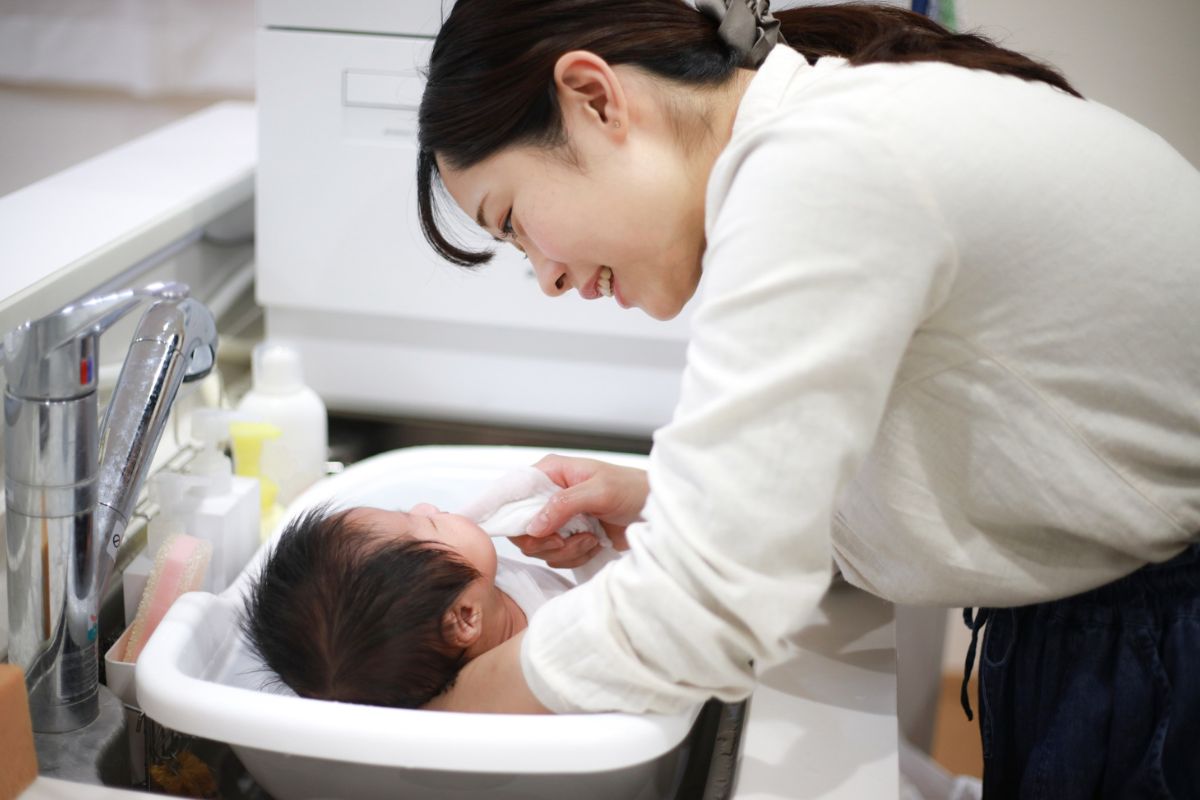 Soothe Before You Start
Swaddle your baby loosely in a thin cloth for a swaddle bath (leaving one limb out at a time to wash), or keep them in a diaper for the first minute while they acclimate.
Warm hands, steady eye contact, and a soft hum can be surprisingly effective.
A Calm, Step-by-Step Bath Flow
If You’re Doing a Sponge Bath
Lay your baby on a towel. Dip a washcloth in warm water and wipe the face first (no cleanser), then neck and behind ears, arms, tummy, legs, and back.
Save the diaper area for last. Keep baby covered where you’re not washing to retain warmth.
If You’re Using a Baby Tub
Support the head and neck with your forearm, and keep a secure hold under the armpit. Start with the face using plain water.
Use a pea-sized amount of mild cleanser for hair and body if you like, but it’s optional; water alone is fine for most first baths.
Rinse gently with the cup, avoiding splashes near the nose and mouth.
 Keep It Short and Steady
Move slowly and speak softly. Watch for early stress cues—quivering lips, hiccups, or arching—and respond by pausing, holding, and warming.
It’s better to stop early on a positive note than push through and overwhelm baby.
After-Bath Comfort and Care
The Transfer
Lift baby out with a steady, deliberate motion, keeping them close to your body to retain heat. Place directly onto the hooded towel and pat dry—no rubbing.
Pay special attention to skin folds (neck, armpits, behind knees) to prevent moisture irritation.
Skin, Scalp, and Nails
If you use a moisturizer, choose a simple, fragrance-free lotion and apply a thin layer while skin is still slightly damp.
If your baby has flaky scalp, a few drops of gentle baby oil massaged in and wiped off later can help. Keep nails short to prevent scratches; an emery board is often easier than clippers for new parents.
 Dress for Warmth
Finish with a clean diaper and soft, breathable clothing. If the room is cool, swaddle or add a light layer. Many babies love skin-to-skin time after the bath—it stabilizes temperature and strengthens bonding.
Make It a Bonding Ritual
The first bath is less about technique and more about connection. Try a short routine you repeat each time: a little song, a warm towel cuddle, or a few minutes of baby massage with slow, rhythmic strokes.
Predictable patterns help your baby feel safe and soothed.
Common Worries—and Simple Fixes
If baby cries: Pause, warm, and hold. Add a warm washcloth to the tummy, shorten the bath, or switch to a swaddle bath for extra security.
If baby’s skin looks dry: Reduce frequency, skip cleanser, keep baths brief, and moisturize right after.
If you’re nervous about rinsing hair: Use very little water and pour slowly from the back of the head forward, shielding the forehead with your hand.
 Smart Safety Habits You’ll Keep Forever
Never leave your baby unattended, not even for a second. If you forgot something, take baby with you. Keep your phone out of reach to avoid distractions.
Make sure cords, heaters, and toiletries are away from the bath area. Use only baby-safe products and minimal amounts. Above all, trust your pace—there’s no prize for finishing fast.
What to Skip in the Early Days
Avoid strong fragrances, bubble baths, and adult soaps, which can irritate newborn skin.
Don’t over-bathe—2–3 times a week is usually enough for new babies, with face, neck, and diaper changes cleaned daily.
Skip bath rings or seats not designed for newborns; your hands are the best support.
Troubleshooting Temperature and Tears
If the water is perfect but baby still fusses, the room might be cool. Try warming the towel in a dryer for a minute, closing a drafty window, or bathing at a different time of day.
Some babies prefer quicker baths followed by an extended warm cuddle rather than lingering in the water. Follow your baby’s cues—they’re the best guide you have.
 Building Confidence, One Bath at a Time
Each bath is practice for both of you. Keep doing the simple things well: prepare your space, stay present, and end on warmth and connection. You’ll find the flow that fits your family.
From First Splash to Sweet Routine: Your Next Cozy Bath Awaits
The first bath doesn’t need to be perfect—it just needs to feel safe, warm, and loving.
With a tidy setup, gentle handling, and patient, predictable steps, you’ll transform those early jitters into a calm, joyful ritual.
As your confidence grows, so will your baby’s comfort. Before long, that first splash turns into the coziest part of your day.
Did you find this post useful or inspiring? Save THIS PIN to your PARENTING Board on Pinterest! 😊


You may also like