
20 Indoor Family Games That Bring Everyone Together (All Ages)
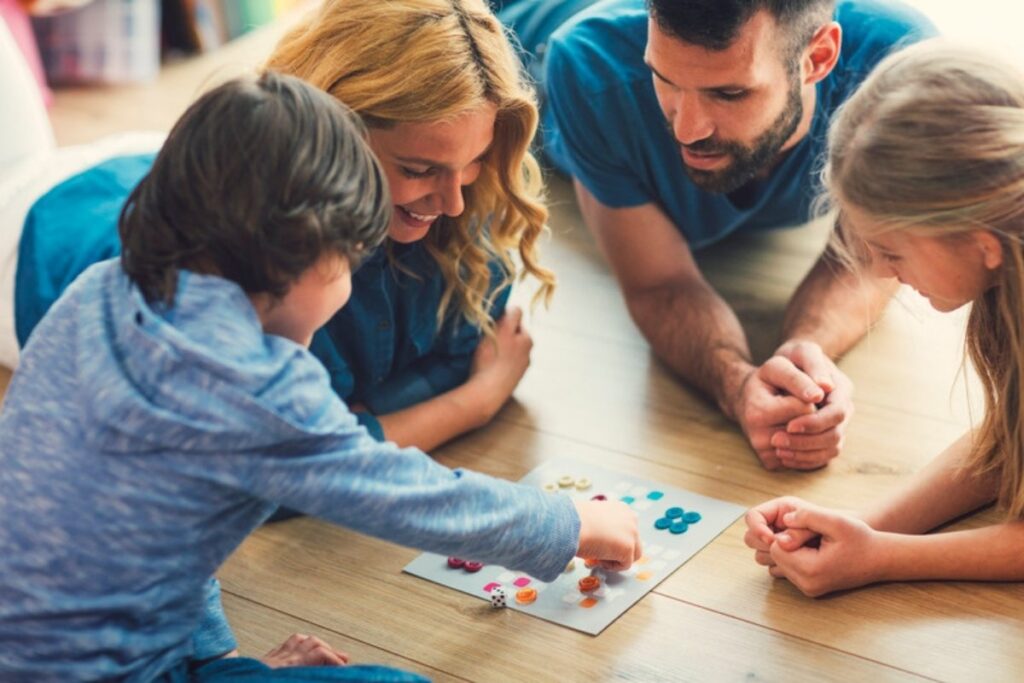
Cold weather, rainy weekends and early sunsets mean more time inside. That can lead to bored kids and too much screen time, or it can turn into some of the best hours your family spends together. Games are the easiest way to make that happen. Most need little or no equipment, they work for mixed ages, and they get everyone laughing at the same table.
Below you'll find 20 indoor family games grouped by type: board games, card games, no-equipment party games, active games for high energy days, and quiet games for calmer evenings. We've added the best age range for each one, a quick table to help you choose, and a few tips for keeping game time fun when kids are different ages.
How to Pick the Right Game for Your Family
Before you pull out a box, think about three things:
- The youngest player. Choose a game the youngest child can follow, then add small challenges for older kids and adults.
- Energy level. After a long day stuck inside, kids may need to move. On a sleepy Sunday evening, a quiet puzzle or story game fits better.
- Time. Some games take five minutes. Others take an hour. Short games are better on school nights and for children under five.
It also helps to keep a small "game basket" in the living room with a deck of cards, paper, pencils, a timer and two or three favorite boxes. When everything is in one place, starting a game takes seconds.
Board Games Everyone Can Play
Board games have been a family favorite for generations because they mix luck, strategy and plenty of talking. They also teach kids to take turns, follow rules and handle losing, which are skills that matter far beyond the game table.
1. Candy Land or Chutes and Ladders (ages 3+)
These are perfect first board games. No reading is needed, and luck decides the winner, so younger kids can beat older siblings and parents fairly.
2. Connect Four (ages 5+)
Quick rounds and simple rules make it great for two players. It quietly teaches planning ahead, since kids learn to block their opponent.
3. Clue (ages 8+)
A classic mystery game that builds logic and memory. Younger children can play on a team with a parent.
4. Scrabble or a junior word game (ages 6+)
Word games help with spelling and vocabulary. To keep it fair for younger players, let them use a picture dictionary or play in pairs.
5. Monopoly (ages 8+)
Long, but a great way to talk about money, saving and trading. Set a timer for one hour and count up cash and property at the end so the game doesn't drag on.
The nice thing about board games is how flexible they are. If you only have 15 minutes, play a short one. If you have a free afternoon, play a long one or set up a mini tournament with two or three games.
Party Games With No Equipment

Few things fill a room with laughter like a guessing game. These need nothing but your imagination, so they're perfect for spontaneous fun or for keeping kids busy while dinner cooks.
6. Charades (ages 4+)
Write simple words on slips of paper: animals, jobs, sports, favorite characters. Players act them out without speaking while everyone else guesses. For little ones, use animals only. They love being a frog or an elephant.
7. Pictionary on paper (ages 5+)
All you need is paper and pencils or a small whiteboard. Bad drawings are part of the fun, so nobody needs to be an artist. Make two teams and give each round 60 seconds.
8. Twenty Questions (ages 6+)
One person thinks of an object, animal or person. Everyone else asks yes or no questions to figure it out. It's a great car game too.
9. Simon Says (ages 3+)
Simple, silly and great for listening skills. Let the kids take turns being Simon. They love giving the grown-ups orders.
10. "Would You Rather" (ages 5+)
Ask funny questions like "Would you rather have a pet dragon or a pet unicorn?" Everyone answers and explains why. It's a quiet way to learn how your kids think.
Active Games for High Energy Days
When kids are bouncing off the walls, give that energy a job. These games get bodies moving without needing a big space.
11. Indoor scavenger hunt (ages 3+)
Hide small objects around the house and give simple clues or a picture list. Older kids can solve riddles that lead to the next clue. Theme it for holidays, colors or favorite toys to keep it fresh.
12. Freeze dance (ages 2+)
Play music and stop it at random. Everyone must freeze in place. Anyone who moves does a silly task before the next round.
13. Animal walk race (ages 3+)
Call out an animal and everyone moves across the room like it: bear crawl, frog jumps, crab walk, penguin waddle. Let the kids call out the next animal. Clear a path and move breakable items out of the way first.
14. Hide and seek (ages 3+)
A classic for a reason. Set clear rules about off-limit rooms and spaces before you start, and keep younger kids paired with an adult or older sibling.
15. Tape hopscotch (ages 4+)
Use painter's tape to make a hopscotch grid on the floor. It peels off easily and works on carpet or hard floors.
Quiet Games for Calm Evenings
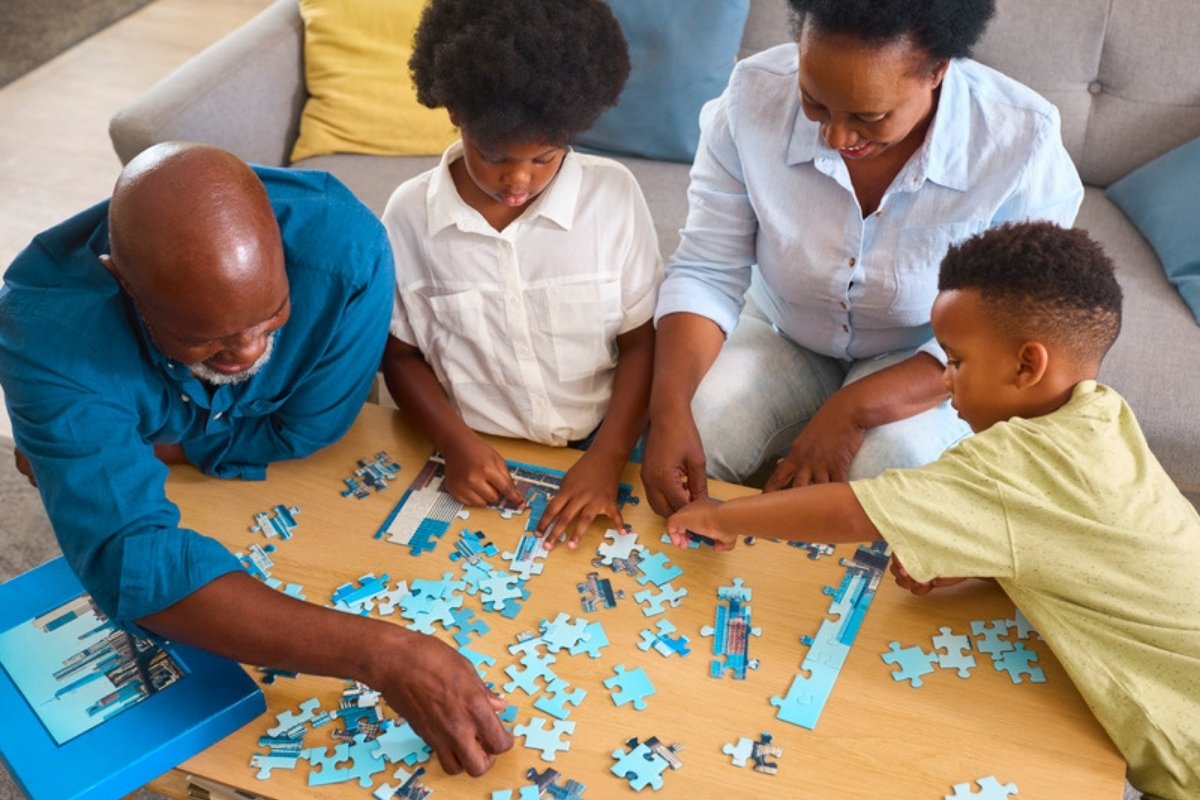
Not every game needs to be loud. These slower activities are perfect before bedtime or when grandparents come over.
16. Family jigsaw puzzle (ages 3+)
Pick a puzzle with a mix of easy and hard sections so everyone can help. Younger kids can sort edge pieces or find all the pieces of one color. Leave it out on a side table and add pieces over several days.
17. Storytelling chain (ages 4+)
One person starts a story with a single sentence. The next person adds the next sentence, and so on around the circle. Stories get wonderfully strange, and kids practice language and listening at the same time.
18. I Spy (ages 3+)
Great for little ones learning colors and letters. Use "something red" for toddlers and "something that starts with B" for early readers.
Card Games for All Ages
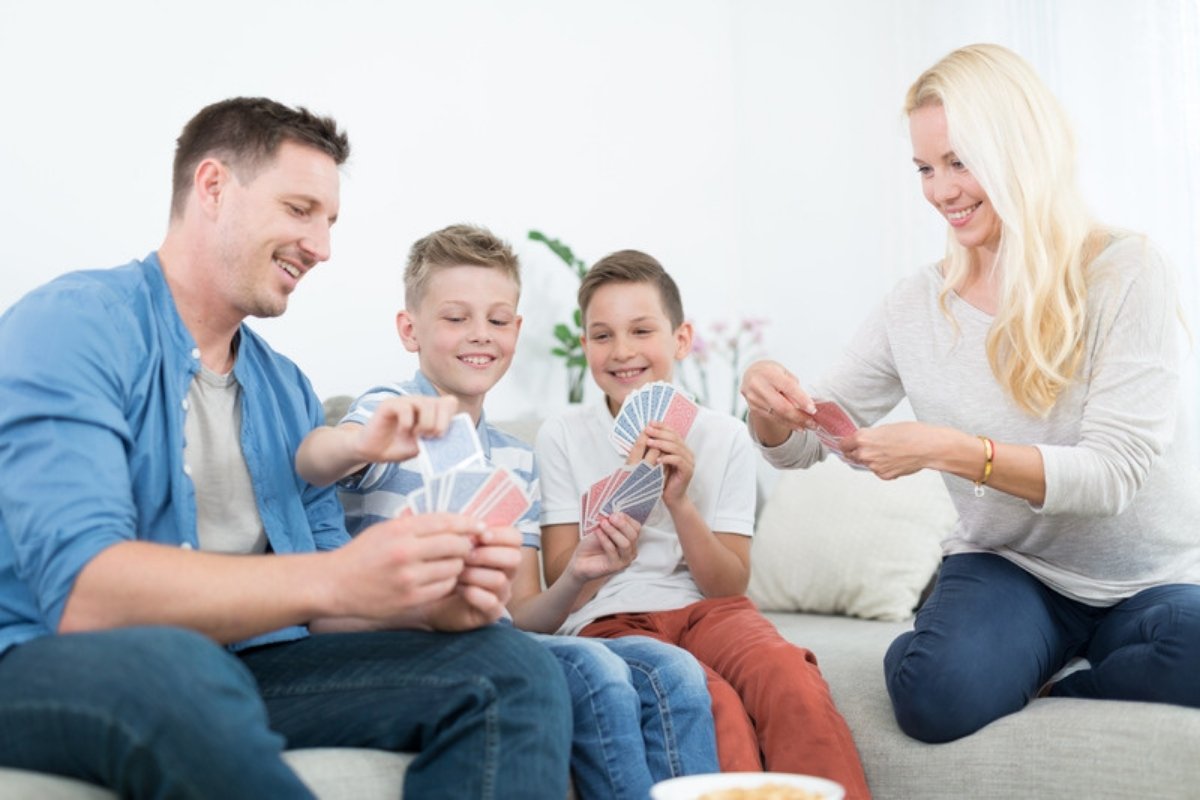
One deck of cards can give you dozens of games. Cards are cheap, small and easy to take to grandma's house or on a trip.
19. Go Fish, Crazy Eights or Uno (ages 4+)
Simple matching games that teach numbers, colors and taking turns. Younger kids can hold their cards in a small cup or a card holder made from a cardboard box.
20. Rummy or Spades (ages 8+)
Once kids are ready for more strategy, these games build memory and quick thinking. Play open-handed for the first few rounds so you can coach new players.
Quick Guide: Which Game Fits Your Day?
| Situation | Try these | Time |
|---|---|---|
| Toddlers and preschoolers | Freeze dance, I Spy, Candy Land, animal walk race | 5 to 15 minutes |
| Mixed ages (3 to 12) | Charades, scavenger hunt, Uno, storytelling chain | 15 to 30 minutes |
| Older kids and teens | Clue, Monopoly, Rummy, Pictionary in teams | 30 to 60 minutes |
| Kids need to move | Hide and seek, hopscotch, Simon Says | 10 to 20 minutes |
| Calm before bedtime | Jigsaw puzzle, I Spy, Twenty Questions | 10 to 30 minutes |
| No supplies at all | Charades, Would You Rather, Twenty Questions | Any |
Tips for Fun (and Fair) Family Game Time
- Use teams. Pair a young child with an older sibling or parent. Nobody feels left behind, and older kids learn patience.
- Keep the first round short. Kids learn by playing, not by listening to long rule explanations.
- Model good losing. When you lose, say "That was fun, good game!" Kids copy what they see.
- Rotate who picks. Let each family member choose the game on different nights.
- Stop while it's still fun. End before kids get tired or cranky, so they look forward to the next time.
Making Game Time a Family Habit
You don't need a big plan. Pick one evening a week, add a simple snack and let the kids choose the first game. Over time, game night becomes a ritual your kids remember and look forward to. If you want more ideas for setting it up, our guide to planning the perfect family game night walks you through snacks, themes and simple routines.
The best part is that these games build real skills without feeling like lessons. Kids practice counting, reading, problem solving, patience and teamwork, all while laughing with the people they love most.
Frequently Asked Questions
What age can kids start playing board games?
Many children can enjoy simple luck-based games like Candy Land around age 3. Games with more rules and strategy usually work better from age 5 or 6. Watch your child's attention span and keep early games short.
How do I handle a child who gets upset when they lose?
This is very common. Play team games or cooperative games where everyone works together, talk about feelings before you start, and praise effort and good sportsmanship rather than winning.
What are good indoor games for a big group of kids?
Charades, freeze dance, Simon Says and scavenger hunts all work well with large groups because everyone can play at once and nobody waits long for a turn.
You might also like


You may also like